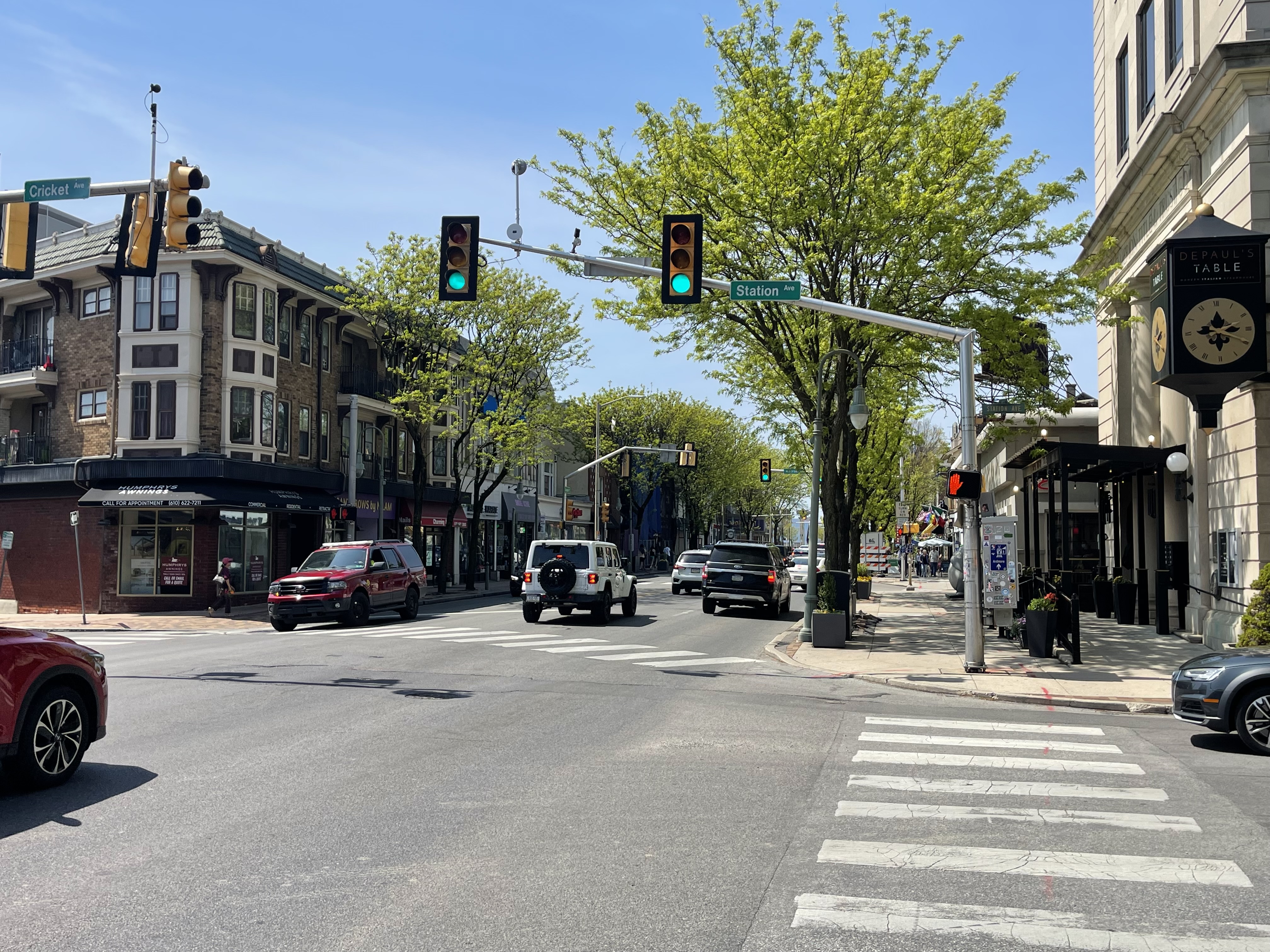
Lower Merion Township is getting nearly $400,000 from the state to modernize traffic signals at 27 intersections along Lancaster Avenue and Wynnewood Road, a stretch that runs through the heart of the Main Line's busiest shopping and commuting corridor.
State Rep. Tim Briggs, D-Montgomery, announced the $397,200 Green Light-Go grant on Tuesday, Aug. 4. The competitive PennDOT program funds signal upgrades, LED technology and retiming at existing intersections.
"These investments will make a real difference for everyone who travels through Lower Merion every day," Briggs said. He added that modernized signals will reduce congestion and improve safety along the corridor.
What's covered
The grant targets 24 intersections along Lancaster Avenue, stretching from County Line Road near Bryn Mawr on the township's western edge to Lankenau Drive near Wynnewood. Three additional intersections on Wynnewood Road, at Morris Avenue, Penn Road/Private Drive and Williams Road, are also included.
That's 27 intersections total.
Among the Lancaster Avenue locations: Bryn Mawr Avenue, Ardmore Avenue, Haverford Station Road, Church Road and Remington Road. That last intersection already hosts the township's first red light camera, activated in April 2026, making it a focal point of multiple traffic safety investments.
The township recorded 1,149 reportable motor vehicle crashes in 2025, including three fatalities, according to Lower Merion Police Chief Andy Block at a June 2026 civic meeting.
Second grant in eight months
This is Lower Merion's second Green Light-Go award in less than a year. In December 2025, the township received $385,596 for signal work along Lancaster and Elliott avenues. The new grant is larger and covers a significantly broader stretch of Lancaster Avenue.
The award is part of a $38 million statewide round announced by PennDOT on Aug. 4, with 86 municipalities sharing the funds. Since Gov. Josh Shapiro took office, $134 million has been distributed through the program and more than 1,700 signals upgraded statewide.
Local match required
Green Light-Go is a reimbursement program, meaning Lower Merion must complete the work before receiving state funds. The program requires a minimum 20% local match, which would put the township's share at roughly $99,300.
No project start date has been announced. The township has not publicly detailed a construction timeline or what specific hardware will be installed at the 27 intersections.